From Reagent Supplier to Co-Author: Our First Published Paper, with Johns Hopkins University
We’re proud to share a milestone for SigutLabs: our first scientific paper as authors, published in RSC Chemical Biology in collaboration with Johns Hopkins University.
The paper, “Cellular Engagement of the SARS-CoV-2 Macrodomain”, sheds new light on how a familiar antiviral molecule behaves inside living cells — and it builds directly on nucleoside chemistry we’ve been developing since the early days of the COVID-19 pandemic.
The science: an old molecule, a new mechanism
When Remdesivir became one of the first antivirals authorized for COVID-19, most of the attention went to the drug itself. Less attention went to its parent nucleoside, GS-441524, and to exactly how it interacts with the virus once inside a human cell.
SARS-CoV-2 encodes a protein called the macrodomain (Mac1), part of its Nsp3 protein. Mac1 acts like a shield: it strips away a chemical marker (ADP-ribose) that the host immune system uses to signal an infection, helping the virus fly under the radar of our innate immune defenses. Because knocking out Mac1 activity has been shown to cripple the virus’s ability to replicate, it has become an attractive — but still poorly understood — target for next-generation antivirals that work through a completely different mechanism than existing direct-acting antivirals.
This new study, led by the team at Johns Hopkins University, demonstrates for the first time that GS-441524 directly engages Mac1 inside living cells — not just in a test tube — while leaving the closest related human protein untouched. That selectivity matters: it’s the difference between a molecule that might disrupt the virus’s defenses and one that could disrupt our own cellular machinery in the process.
Our role: the chemistry behind the tools
Every good cell biology study needs reliable, high-purity chemical tools — and this is where SigutLabs came in.
We supplied the Johns Hopkins team with Remdesivir monophosphate, diphosphate, and triphosphate, the key phosphorylated metabolites used as tool compounds in the study. These aren’t trivial molecules to make. Since 2018, nucleoside and nucleotide chemistry has been one of our core areas of expertise, and during the COVID-19 pandemic we became one of the only commercial sources of Remdesivir phosphate derivatives — work that has quietly supported antiviral research groups around the world ever since.
Being asked to supply these compounds for a study like this, and now to be recognized as authors on the resulting publication, reflects exactly the kind of scientific partnership we want to build: not just as a contract chemistry supplier, but as a genuine contributor to the research itself.
Why this matters for our clients and collaborators
This project is a good example of what we try to bring to every collaboration, whether it’s academic research or industry drug discovery:
- Deep nucleoside/nucleotide expertise — from Remdesivir phosphates to AMPylation probes like pro-N6pA
- Reliability on hard-to-make molecules — many of the compounds we produce aren’t commercially available anywhere else
- A research mindset, not just a manufacturing one — we care about the science our chemistry enables
We’re grateful to the team at Johns Hopkins University for the collaboration, and proud that our chemistry played a part in advancing the understanding of this important antiviral target.
📄 Read the full paper: Cellular Engagement of the SARS-CoV-2 Macrodomain, RSC Chemical Biology, 2026.

OUR CASE STUDY
Scale-up to accelerate drug discovery
Our experience helped overcome development hurdles for potential cancer & mental health drugs.
Read moreEmpowering neuro research with pro-N6pA
Sigut Labs scaled up pro-N6pA production, simplifying AMPylation research & boosting accessibility.
Read moreADC development leaps with new linkers
Novel linker design expedited ADC advancement, leading to promising lead compounds faster.
Read moreLincomycin derivative scale-up
Over 30 g of the desired product with exceptional purity was obtained through our optimized procedure.
Read morePurifying 350 kg of vitamin K2 oil
Our innovative scale-up technology helped to reduce the client’s purification process from days to hours.
Read moreOur services
What we excel in so you don’t have to
Custom synthesis
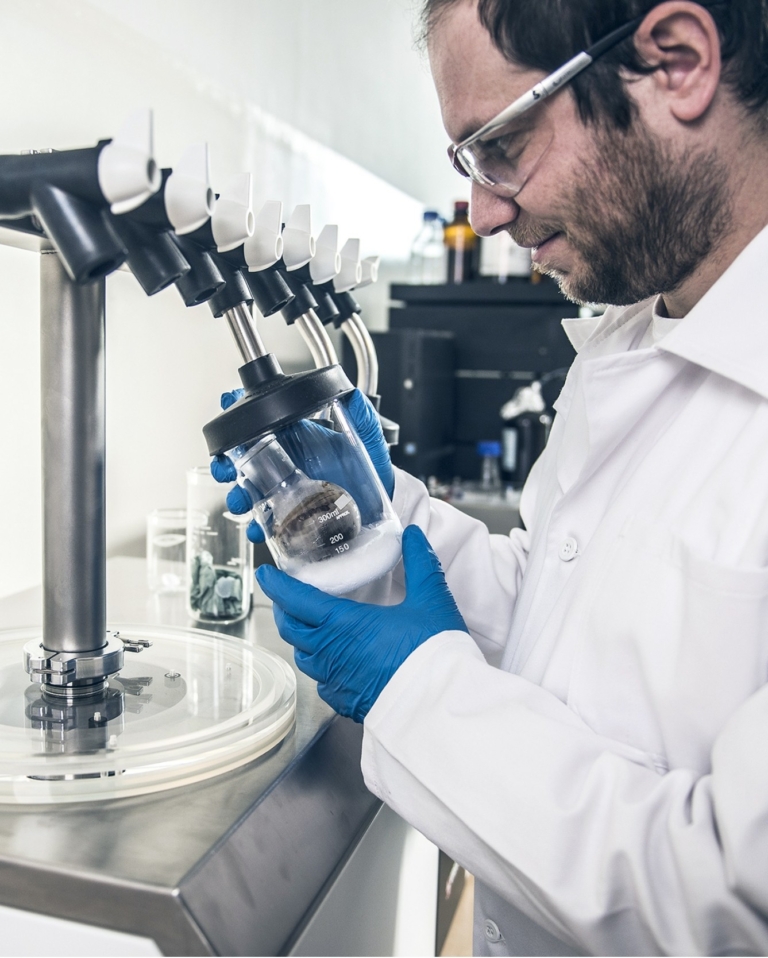
Providing for a custom synthesis of previously reported molecules using described synthetic procedures.
View more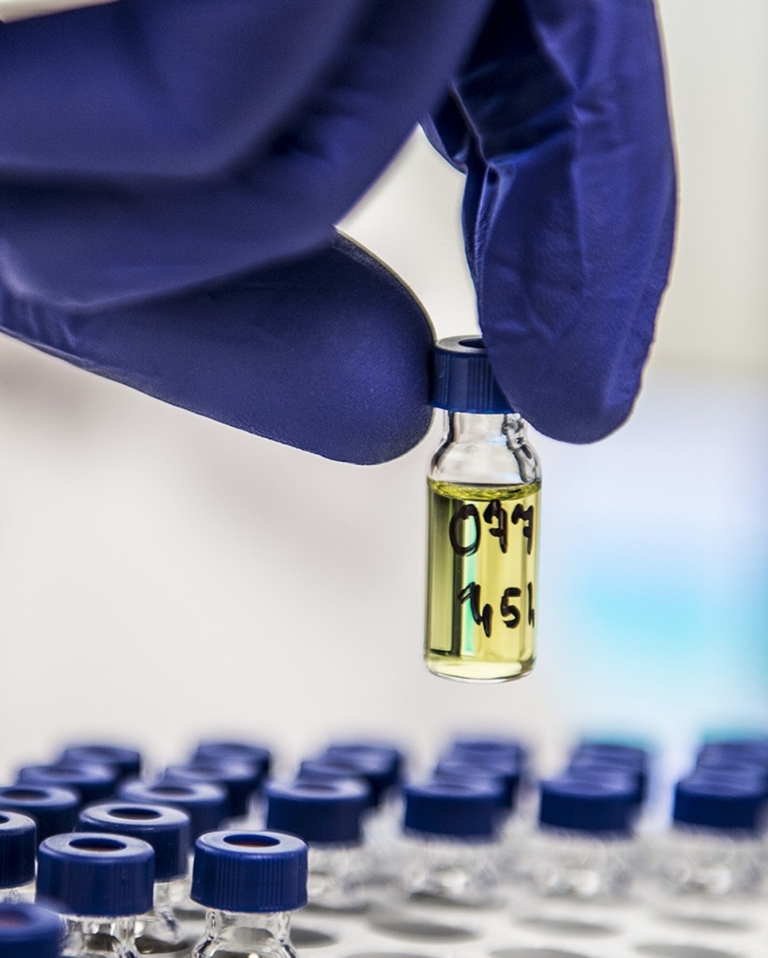
Contract research
Developing novel synthetic routes to provide undescribed compounds in organic, bioorganic, and medicinal chemistry.
View more





Our Experts


Partners & distributors