From Marine Sponge to ADC Payload: The Chemistry Behind Eribulin
Some of the best stories in drug development are stories about chemistry solving what looks like an impossible problem. Eribulin is one of them. It began as a strikingly complex marine natural product and became a practical, scalable ADC payload — a transformation that illustrates how thoughtful synthetic chemistry can turn an intractable molecule into a clinical tool.
The Problem: A Molecule Too Complex to Make
The starting point was halichondrin B, a compound isolated from marine sponges. It showed remarkable cytotoxic potency, but it carried a fatal practical flaw: its structure was far too complex to manufacture at any meaningful scale. A molecule that cannot be made reliably and economically cannot become a drug, however potent it is in the lab.
The breakthrough came from a careful structure-activity insight. Researchers found that most of halichondrin B’s biological activity originated from one key region of the molecule, rather than from the full, elaborate structure.
The Solution: Simplify and Retain the Active Core
By simplifying the overall architecture while retaining that active core, chemists created eribulin — a substantially more tractable molecule that preserved the potency of the original. For ADC development specifically, this redesign brought two concrete advantages:
- Improved synthetic scalability, making reliable manufacture feasible
- A defined conjugation site, allowing precise and reproducible linker attachment
These are not minor conveniences. Scalability and controlled conjugation are precisely the properties that determine whether a payload can move from concept into a developable ADC.

More Than a Manufacturing Win
What makes eribulin especially interesting is that its advantages go well beyond ease of synthesis. Compared with traditional tubulin inhibitors such as MMAE or DM1, eribulin has a distinct pharmacological profile:
Selective microtubule binding. Eribulin binds specifically to microtubule plus-ends, blocking their growth and driving an irreversible G2/M cell-cycle arrest. This mechanism is mechanistically distinct from many other antimitotic payloads.
Tumour microenvironment remodelling. Beyond direct cytotoxicity, eribulin has been associated with reversal of epithelial-mesenchymal transition (EMT) and with normalisation of tumour vasculature — effects that may render tumours less aggressive and more responsive to therapy.
A strong bystander effect. After ADC internalisation and payload release, free eribulin can diffuse into neighbouring tumour cells. This helps address the heterogeneous antigen expression that complicates treatment of solid tumours, extending activity beyond the directly targeted cells.
Into the Clinic
These combined chemical and pharmacological properties enabled the development of MORAb-202 (farletuzumab ecteribulin), an ADC developed by Eisai that is currently in clinical studies. It is a concrete demonstration that the upfront investment in redesigning eribulin paid off downstream — a manufacturable, well-behaved payload with a differentiated mechanism became the foundation for a clinical-stage conjugate.
The Broader Lesson
The eribulin story is a reminder that breakthrough payloads begin with exceptional chemistry. A natural product’s potency is only the starting point; turning it into a usable therapeutic often demands structural simplification, careful preservation of the pharmacophore, and design choices that anticipate downstream conjugation. The chemistry done early determines what is possible later.
How SigutLabs Can Help
These are exactly the challenges SigutLabs is built to tackle. We support the full arc from difficult molecule to developable payload:
- Structural simplification and synthetic route development for complex scaffolds
- Pharmacophore optimisation to retain activity while improving drug-like properties
- Precision linker-payload conjugation and defined conjugation-site design
If you are working to transform a complex molecule into a next-generation payload, we would be glad to discuss how chemistry can accelerate the work.

OUR CASE STUDY
Scale-up to accelerate drug discovery
Our experience helped overcome development hurdles for potential cancer & mental health drugs.
Read moreEmpowering neuro research with pro-N6pA
Sigut Labs scaled up pro-N6pA production, simplifying AMPylation research & boosting accessibility.
Read moreADC development leaps with new linkers
Novel linker design expedited ADC advancement, leading to promising lead compounds faster.
Read moreLincomycin derivative scale-up
Over 30 g of the desired product with exceptional purity was obtained through our optimized procedure.
Read morePurifying 350 kg of vitamin K2 oil
Our innovative scale-up technology helped to reduce the client’s purification process from days to hours.
Read moreOur services
What we excel in so you don’t have to
Custom synthesis
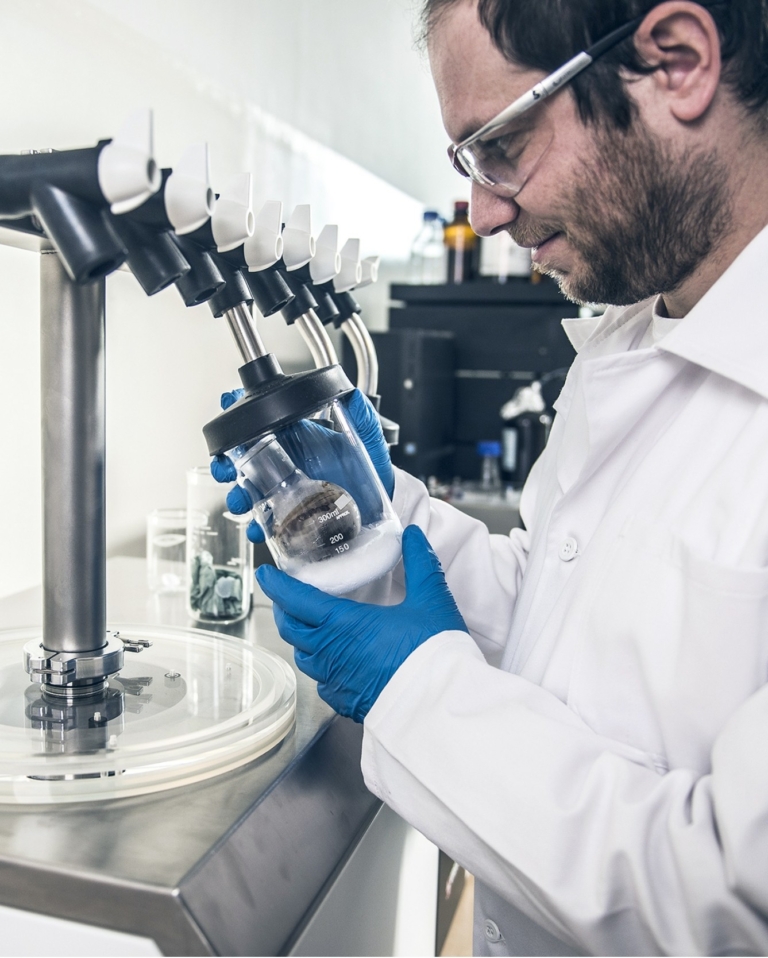
Providing for a custom synthesis of previously reported molecules using described synthetic procedures.
View more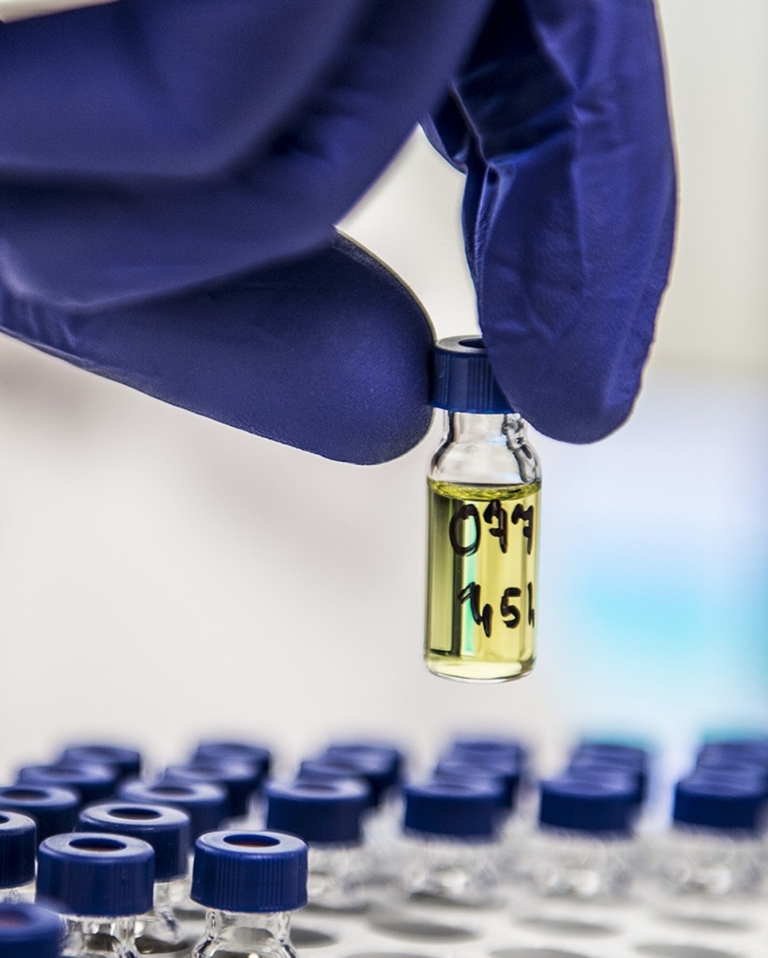
Contract research
Developing novel synthetic routes to provide undescribed compounds in organic, bioorganic, and medicinal chemistry.
View more




Our Experts


Partners & distributors