Why Resistance Mechanisms Matter for Next-Generation ADC Design
Antibody-drug conjugates have transformed oncology, but as their clinical use matures, so does our understanding of how cancers escape them. A recent article in Cancer Discovery by Tess A. O’Meara and Paolo Tarantino (https://doi.org/10.1158/2159-8290.CD-25-2102) highlights a nuanced but consequential insight about trastuzumab deruxtecan (T-DXd): not all tumors resist in the same way, and the type of resistance depends heavily on HER2 biology.
This distinction carries real implications for how we design the next generation of ADCs — and it is a distinction that puts chemistry front and centre.

Two Tumors, Two Escape Routes
HER2-Low Disease: Escaping the Target
In HER2-low tumors, HER2 expression is present but not a dominant driver of growth. Because the target is more dispensable, cancer cells have a relatively straightforward path to resistance: simply reduce or lose HER2 expression. With less antigen on the cell surface, ADC binding and internalization fall off, and the therapeutic effect diminishes.
The problem is a biological one — but the solution is a chemistry one.
HER2-Amplified Disease: Escaping the Payload
In HER2-amplified tumors, the picture is different. Here, HER2 is a core oncogenic driver; losing it is not easily tolerated by the cell. Resistance therefore tends to emerge downstream — most often through adaptation to the payload itself, such as topoisomerase I resistance mechanisms. Binding-site mutations in HER2 are described but appear less common.
In this context, the target remains intact, but the warhead loses its edge.
What Chemistry Can Do
Reading this through a chemist’s lens, these two resistance profiles call for fundamentally different design responses.
When the Payload Is the Problem
If tumors are adapting to the cytotoxic warhead, the answer is not simply to optimize the same scaffold — it is to bring in entirely different mechanisms of action. This is where chemistry opens doors:
- Novel warhead classes with distinct intracellular targets (e.g., beyond topoisomerase inhibitors)
- Targeted protein degraders (PROTACs and molecular glues) as payloads, exploiting the proteasome rather than direct cytotoxicity
- Immune-activating payloads that reprogram the tumor microenvironment rather than relying solely on direct cell killing
Each of these requires sophisticated synthetic chemistry — particularly for molecules that must remain stable in circulation while retaining potency after delivery.
When the Target Is the Problem
If resistance stems from antigen loss or downregulation, the solution needs to work around heterogeneous or low HER2 expression. This is where linker–payload chemistry becomes critical:
- Extracellular cleavage systems that release active payload in the tumor microenvironment, upstream of internalization — meaning the drug can act on neighboring antigen-negative cells
- Enhanced bystander activity, designed intentionally into the linker chemistry to broaden the zone of cytotoxic effect
- Preclinical evidence suggests that extracellular protease-mediated payload release may be particularly valuable in lower-HER2 settings, where traditional internalization-dependent delivery is insufficient
These are not incremental modifications. They require rethinking how the linker interacts with the biology of the tumor stroma and the immune microenvironment.
The Bigger Principle
What this paper makes clear is that ADC resistance is not a single problem with a single solution. The tumor’s escape route is shaped by the biology of the target. That biology should therefore shape the chemistry strategy.
If the warhead is failing, change the warhead. If the target is failing, redesign how the drug reaches the target.
This kind of mechanism-informed design is where the field is heading — and it is also where the chemistry becomes most challenging and most interesting.
How Sigutlabs Can Help
At Sigutlabs, we work with teams developing next-generation ADCs and therapeutic payloads. Our focus is on the synthetic and medicinal chemistry challenges at the heart of these programs:
- Complex payload synthesis and structure-activity exploration
- Linker design — including cleavable, protease-sensitive, and bystander-optimised systems
- Novel warhead classes, including degrader-based and immune-modulatory payloads
- End-to-end support from concept to conjugation-ready intermediate
If your team is working on next-generation ADC components or therapeutic payloads and you’re looking for a chemistry partner, we would be glad to connect.

OUR CASE STUDY
Scale-up to accelerate drug discovery
Our experience helped overcome development hurdles for potential cancer & mental health drugs.
Read moreEmpowering neuro research with pro-N6pA
Sigut Labs scaled up pro-N6pA production, simplifying AMPylation research & boosting accessibility.
Read moreADC development leaps with new linkers
Novel linker design expedited ADC advancement, leading to promising lead compounds faster.
Read moreLincomycin derivative scale-up
Over 30 g of the desired product with exceptional purity was obtained through our optimized procedure.
Read morePurifying 350 kg of vitamin K2 oil
Our innovative scale-up technology helped to reduce the client’s purification process from days to hours.
Read moreOur services
What we excel in so you don’t have to
Custom synthesis
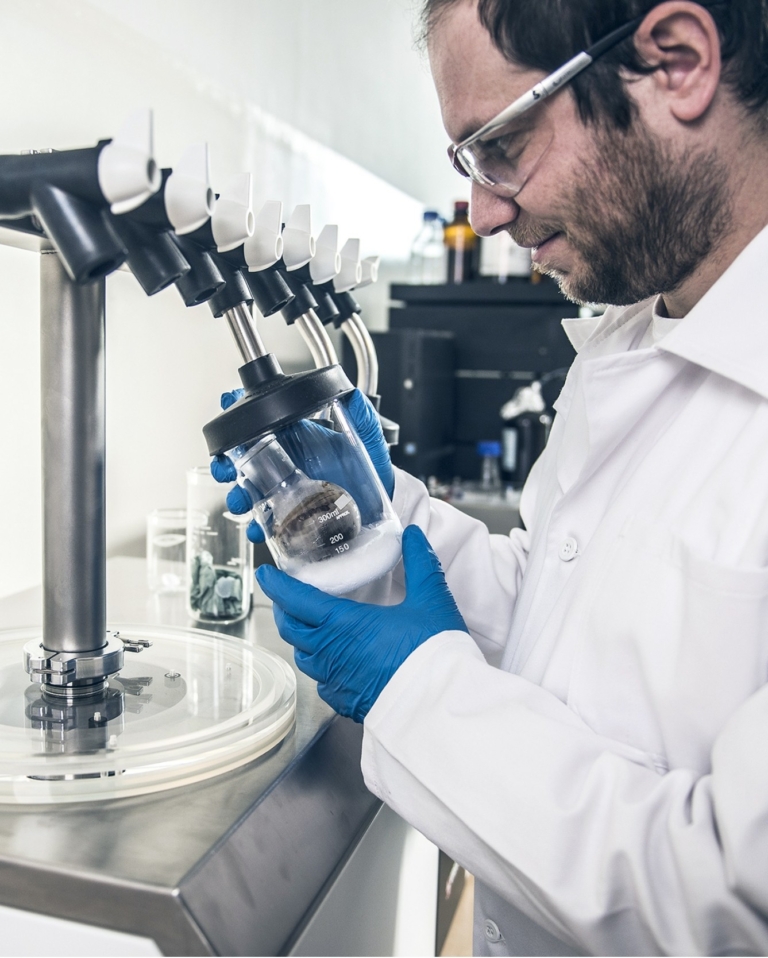
Providing for a custom synthesis of previously reported molecules using described synthetic procedures.
View more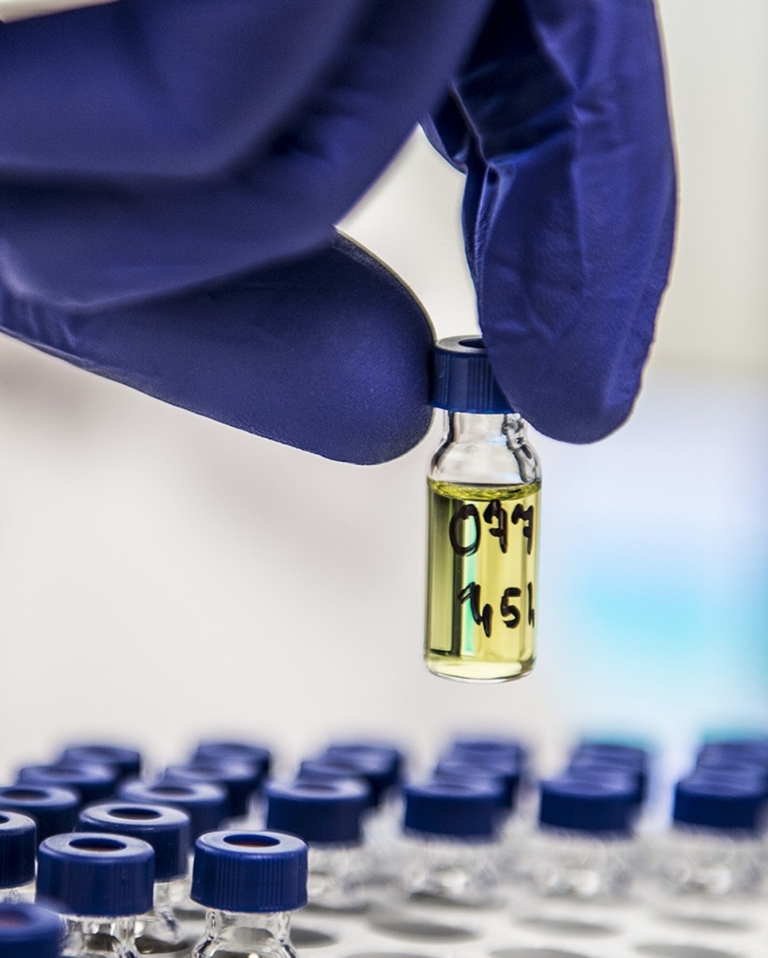
Contract research
Developing novel synthetic routes to provide undescribed compounds in organic, bioorganic, and medicinal chemistry.
View more




Our Experts


Partners & distributors