
The Chemistry of Potency: How Molecular Design Rescued Duocarmycin-Based ADCs
While biology and target selection often define the clinical roadmap, it is chemistry that determines whether an ultra-potent payload is a viable medicine or a toxic liability. The evolution of Duocarmycin-based Antibody-Drug Conjugates (ADCs) is perhaps the finest example of how clever molecular engineering can unlock a payload’s potential while safeguarding the patient.
The Challenge of Ultra-Potency
Early clinical candidates like MDX-1203 and MGC018 utilized one of the most potent DNA-alkylating agents known to science. However, they faced a recurring obstacle: a narrow therapeutic window. When dealing with picomolar activity, issues like off-target uptake and heterogeneous Drug-to-Antibody Ratios (DAR) create significant safety risks that limit effective dosing.
To solve this, the industry didn’t need better biology—it needed smarter chemistry.

Engineering the “Hydrophilic Shield”
One of the primary hurdles with duocarmycin payloads is their extreme hydrophobicity, which often leads to ADC aggregation in circulation. Programs like Trastuzumab duocarmazine (SYD985) solved this by incorporating a diethylene glycol (DEG) unit into the linker architecture.
This DEG unit acts as a hydrophilic “shield” on the PABC carbamate, preventing self-aggregation. This modification ensures the ADC remains stable and soluble in the bloodstream until it reaches the target cell.
The “On-Demand” Activation: Seco-DUBA
The most brilliant aspect of modern duocarmycin design is the use of the “seco” prodrug form.
Internalization: The drug is delivered as a stable, inactive seco-DUBA molecule.
Rearrangement: Upon release within the tumor microenvironment, the molecule undergoes a spontaneous intramolecular rearrangement known as cyclopropanation.
The Trigger: This creates a highly strained, reactive cyclopropane ring that fits precisely into the DNA minor groove, triggering alkylation and cell death.
This “on-demand” chemical trigger, combined with a controlled bystander effect, allows these ADCs to remain effective even in HER2-low tumors, showcasing how chemistry directly influences the mechanism of action.
Precision through Site-Specific Conjugation
The next generation of these therapies, such as SYD1875, has further refined the profile by moving toward site-specific conjugation. By utilizing engineered cysteines to produce a homogeneous ADC with a controlled DAR, chemists can stabilize pharmacokinetics and reduce the variability that plagued early programs.
Your Partner in ADC Innovation
At SigutLabs, we believe that payload design, linker activation, and DAR control are the pillars of a successful ADC. We help our partners optimize these critical chemical features to turn ultra-potent molecules into manageable, effective therapies.
Are you navigating the complexities of payload stabilization or linker design? Let’s connect at SigutLabs to discuss the chemistry behind your next ADC design.

OUR CASE STUDY
Scale-up to accelerate drug discovery
Our experience helped overcome development hurdles for potential cancer & mental health drugs.
Read moreEmpowering neuro research with pro-N6pA
Sigut Labs scaled up pro-N6pA production, simplifying AMPylation research & boosting accessibility.
Read moreADC development leaps with new linkers
Novel linker design expedited ADC advancement, leading to promising lead compounds faster.
Read moreLincomycin derivative scale-up
Over 30 g of the desired product with exceptional purity was obtained through our optimized procedure.
Read morePurifying 350 kg of vitamin K2 oil
Our innovative scale-up technology helped to reduce the client’s purification process from days to hours.
Read moreOur services
What we excel in so you don’t have to
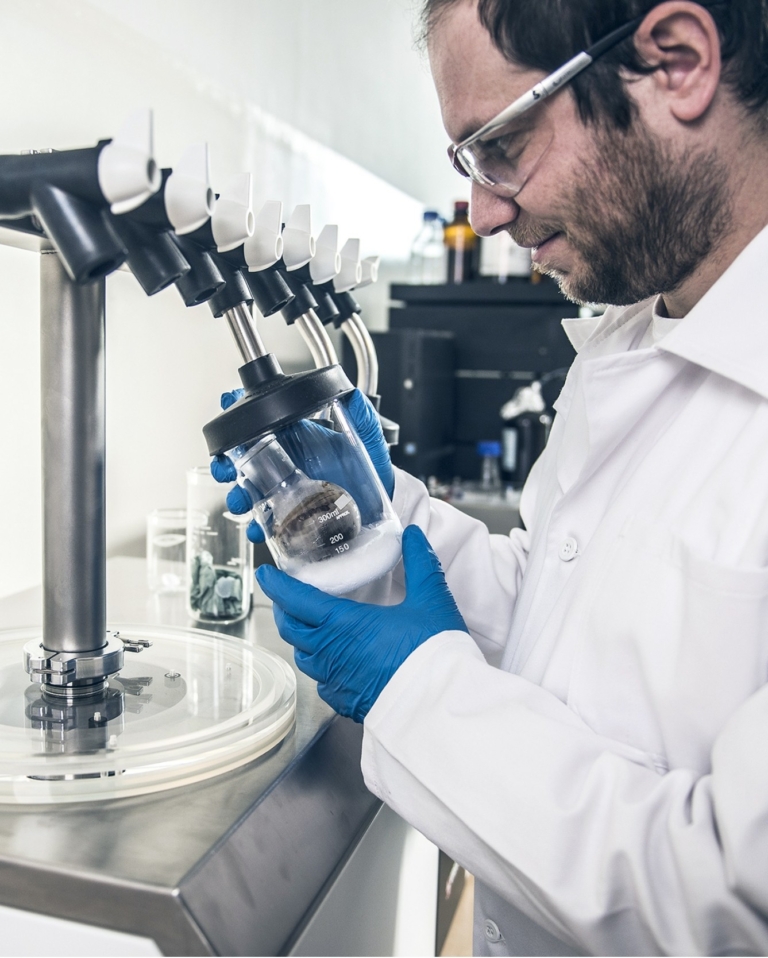
Custom synthesis
Providing for a custom synthesis of previously reported molecules using described synthetic procedures.
View more
Contract research
Developing novel synthetic routes to provide undescribed compounds in organic, bioorganic, and medicinal chemistry.
View more





Our Experts


Partners & distributors