Moving Beyond Maleimides: 2-Methyl(sulfonyl)pyrimidines as Next-Generation Cysteine-Reactive Warheads for ADCs
For decades, maleimide chemistry has been the workhorse for cysteine-based conjugation in antibody–drug conjugates (ADCs). Its popularity is easy to understand: fast reaction kinetics, operational simplicity, and broad adoption across the field.
However, the limitations of maleimides are equally well known. Chief among them are retro-Michael deconjugation and payload transfer to plasma proteins, both of which can compromise linker stability, pharmacokinetics, and ultimately clinical performance. These challenges continue to motivate the search for more robust cysteine-reactive chemistries.
An emerging alternative: 2-methyl(sulfonyl)pyrimidine warheads
One chemistry attracting increasing attention is based on 2-methyl(sulfonyl)pyrimidines.
Unlike maleimides, which react with cysteine residues via Michael addition, 2-methyl(sulfonyl)pyrimidines undergo nucleophilic aromatic substitution (SNAr) with thiols. This mechanism results in the formation of a stable aryl thioether bond, effectively eliminating the risk of retro-Michael reactions and improving conjugate stability in biological environments.

From concept to clinic
Importantly, this is not just an academic curiosity. 2-Methyl(sulfonyl)pyrimidine chemistry has already found its way into advanced preclinical and early clinical ADC programs, underscoring its real-world relevance.
Notable examples include:
SKB264 (MK-2870)
An anti-TROP2 ADC that employs a 2-methyl(sulfonyl)pyrimidine warhead for cysteine conjugation, designed to enhance linker stability compared with classical maleimide-based platforms.TMALIN™ platform (e.g., YL217) – Medilink Therapeutics
A proprietary ADC linker technology built on 2-methyl(sulfonyl)pyrimidine chemistry, enabling site-specific thiol coupling. Multiple TMALIN-based ADCs, including YL217, have progressed into clinical development.
What this means for ADC development
As the field continues to mature, moving beyond maleimides may be critical for the next wave of ADC clinical success. Improved linker stability, better control over conjugation, and reduced off-target payload release are increasingly seen as differentiators rather than nice-to-have features.
At SigutLabs, we closely follow — and actively support — the evolution of next-generation ADC warheads and linker–payload systems. From custom synthesis to advanced linker chemistry, we are ready to support your research and help bring your preferred cysteine-reactive warhead to life.
If you’re exploring alternatives to maleimides, we’d be happy to connect and discuss how we can support your ADC program.

OUR CASE STUDY
Scale-up to accelerate drug discovery
Our experience helped overcome development hurdles for potential cancer & mental health drugs.
Read moreEmpowering neuro research with pro-N6pA
Sigut Labs scaled up pro-N6pA production, simplifying AMPylation research & boosting accessibility.
Read moreADC development leaps with new linkers
Novel linker design expedited ADC advancement, leading to promising lead compounds faster.
Read moreLincomycin derivative scale-up
Over 30 g of the desired product with exceptional purity was obtained through our optimized procedure.
Read morePurifying 350 kg of vitamin K2 oil
Our innovative scale-up technology helped to reduce the client’s purification process from days to hours.
Read moreOur services
What we excel in so you don’t have to
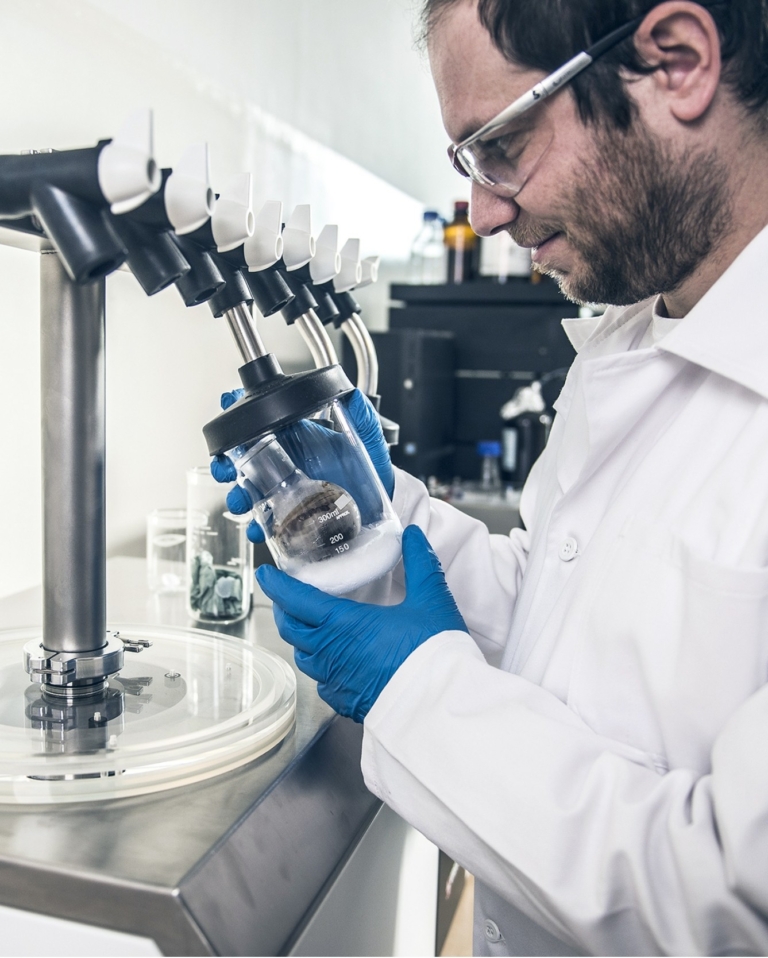
Custom synthesis
Providing for a custom synthesis of previously reported molecules using described synthetic procedures.
View more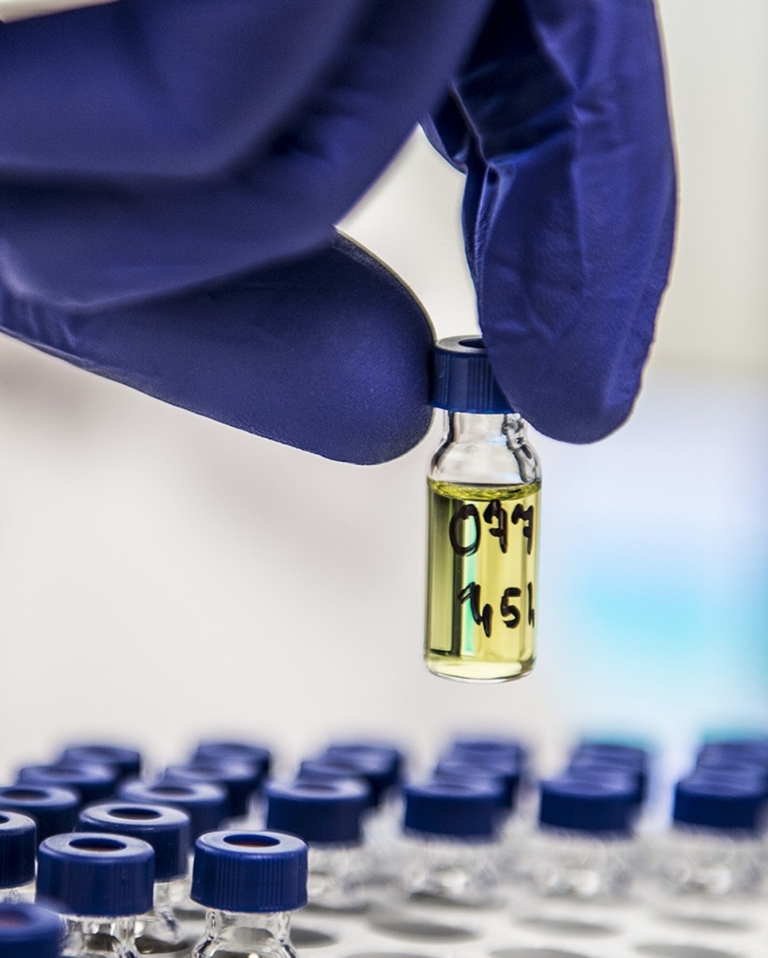
Contract research
Developing novel synthetic routes to provide undescribed compounds in organic, bioorganic, and medicinal chemistry.
View more





Our Experts


Partners & distributors