Expanding the ADC linker toolbox: azobenzene vs. disulfide GSH-cleavable triggers
One of the recurring themes in antibody-drug conjugate development is that progress often comes not from a single breakthrough, but from expanding the toolbox of options available to the chemist. Linker design is a clear example. Each new cleavable trigger that enters the field widens the design space — and a recently described azobenzene-based linker is a compelling case in point.
The Challenge: Stability Versus Release
Every cleavable ADC linker must solve the same fundamental tension. It needs to remain stable in circulation, where premature payload release causes off-target toxicity, while cleaving efficiently once inside the target cell. Intracellular glutathione (GSH), present at far higher concentrations inside cells than in plasma, is one of the most widely exploited triggers for achieving this selectivity.
The question is which chemistry responds to that GSH gradient most cleanly.
The Established Approach: Disulfide Linkers
Disulfide linkers have long been the workhorse GSH-cleavable motif. Their appeal is well-founded:
- The reductive cleavage mechanism is well-understood and predictable
- Intracellular release has been validated clinically across multiple programmes
- They remain among the most robust and proven options available
The trade-off is stability in circulation. Disulfides can be susceptible to nucleophilic attack and off-target reduction, which can lead to premature cleavage. In practice, this is usually managed through steric shielding — adding bulky substituents adjacent to the disulfide bond to slow unwanted reduction. It works, but it adds a layer of structural optimisation that every programme must navigate.

The Emerging Alternative: Azobenzene Linkers
The recently described azobenzene-based system offers a different route to the same goal. Like disulfides, the azo bond undergoes reductive cleavage in response to intracellular GSH. But the mechanism introduces an additional dimension of control.
The reactivity of the azo bond can be tuned through substitution patterns on the aromatic rings. By adjusting these substituents, the cleavage kinetics can be modulated — potentially reducing premature release in circulation while preserving efficient intracellular activation. This gives the chemist a broader, more granular design space than the disulfide system typically allows.
In short: the azobenzene linker appears to offer improved intrinsic stability and more tunable reactivity, without requiring the steric shielding that disulfides often depend on.
So Which Is Better?
Neither — and that is precisely the point.
Disulfide linkers remain, in many respects, the more robust and clinically validated choice. Their behaviour is well-characterised and their track record is real. They may simply require careful structural optimisation to ensure adequate stability.
Azobenzene linkers offer improved intrinsic stability and a potentially broader space for tuning reactivity, but they are earlier in their development trajectory and lack the clinical validation of disulfides.
The right choice depends on the specific biological context, the payload, and the desired release kinetics. At this stage, neither approach can be considered universally superior. What matters more is the broader lesson: the value of diversifying trigger mechanisms so that the design can be matched to the problem, rather than forcing the problem to fit a single available chemistry.
How SigutLabs Can Help
This is exactly where SigutLabs adds value. We provide custom synthesis and contract research across ADC chemistry, with particular focus on:
- Linker design, including established and novel cleavable motifs
- Payload conjugation strategies tailored to specific programmes
- Development of new trigger chemistries matched to your biological context and release requirements
If you are exploring new linker strategies or need support across any stage of ADC development, we would be glad to hear from you.

OUR CASE STUDY
Scale-up to accelerate drug discovery
Our experience helped overcome development hurdles for potential cancer & mental health drugs.
Read moreEmpowering neuro research with pro-N6pA
Sigut Labs scaled up pro-N6pA production, simplifying AMPylation research & boosting accessibility.
Read moreADC development leaps with new linkers
Novel linker design expedited ADC advancement, leading to promising lead compounds faster.
Read moreLincomycin derivative scale-up
Over 30 g of the desired product with exceptional purity was obtained through our optimized procedure.
Read morePurifying 350 kg of vitamin K2 oil
Our innovative scale-up technology helped to reduce the client’s purification process from days to hours.
Read moreOur services
What we excel in so you don’t have to
Custom synthesis
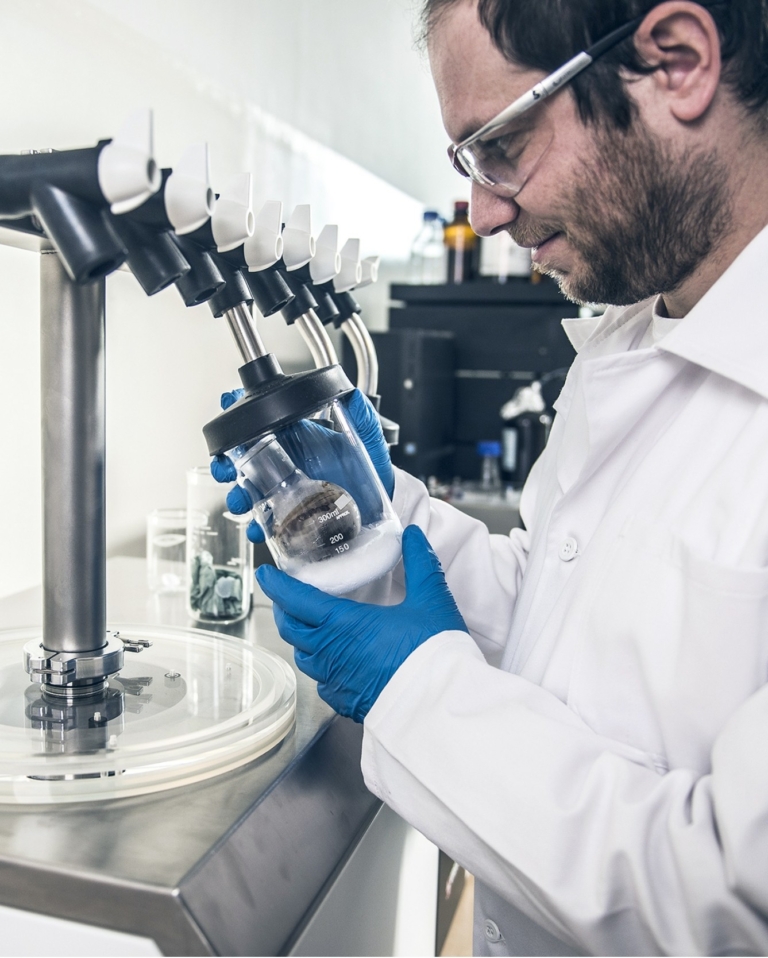
Providing for a custom synthesis of previously reported molecules using described synthetic procedures.
View more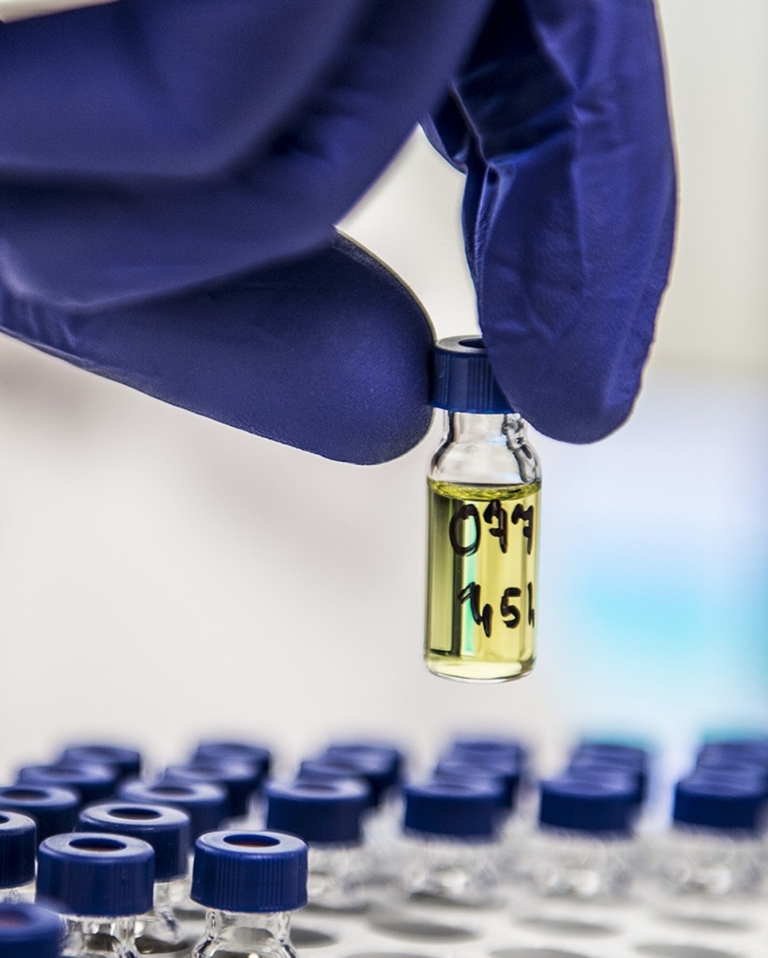
Contract research
Developing novel synthetic routes to provide undescribed compounds in organic, bioorganic, and medicinal chemistry.
View more





Our Experts


Partners & distributors