Enhancing the Stability of Camptothecin Payloads: The E-Ring Challenge
Camptothecins represent one of the most potent classes of Topoisomerase I (Topo I) inhibitors in oncology and serve as a cornerstone for modern Antibody-Drug Conjugates (ADCs). Well-known derivatives such as SN-38, exatecan, and deruxtecan-type payloads have demonstrated significant clinical success, yet the scaffold possesses an inherent chemical vulnerability that researchers continue to address.
The Critical Role of the E-Ring Lactone
The efficacy of camptothecin-based payloads relies heavily on the E-ring lactone. This structural element is essential for stabilizing the Topo I–DNA covalent complex, which ultimately triggers tumor cell death. However, under physiological conditions, the lactone exists in a reversible equilibrium. It can open into an inactive carboxylate form, which significantly limits the drug’s effective exposure and potency.
For ADCs, maintaining molecular integrity is paramount. The payload must remain stable during systemic circulation and only release its active form once it reaches the intracellular target environment. Consequently, managing this lactone-carboxylate equilibrium is a primary focus of ADC medicinal chemistry.

Evolutionary Strategies in Medicinal Chemistry
Over several decades, various strategies have been employed to stabilize the camptothecin scaffold:
Ring Expansion: Modifying the E-ring to prolong the lifetime of the lactone.
Functional Replacements: Identifying bioisosteres that preserve Topo I poisoning while resisting hydrolysis.
Analogue Optimization: Refining clinical candidates to better balance solubility, systemic exposure, and toxicity profiles.
While these iterations have improved the scaffold’s performance, the intrinsic tendency of the lactone to hydrolyze remains a defining constraint in payload design.
D-Ring Modulation: An Indirect Path to Stability
A sophisticated approach currently generating interest involves sulfur-replacement in the neighboring D-ring. By introducing thioamide or thiolactam motifs, researchers can modulate the electronic environment of the camptothecin core.
The objective of this modification is not to replace the E-ring lactone directly, but to influence its hydrolysis kinetics indirectly. These D-ring electronic effects aim to shift the equilibrium in favor of the active, closed lactone form.
Sulfur-modified analogues, such as thioexatecan-type structures, represent an intriguing strategy for addressing the long-standing stability liabilities of this class. While these effects have been observed in model systems and preclinical studies, clinical validation remains the next major milestone. Nevertheless, these advancements highlight the precision required to preserve drug integrity during systemic circulation and maximize intracellular delivery.
Collaborative Innovation at SigutLabs
Developing high-performance ADCs requires a deep understanding of payload behavior and the chemistry that governs it. At SigutLabs, we collaborate with partners to address these complex medicinal chemistry challenges.
Our team provides expert support in custom payload synthesis and the integration of sophisticated linker–payload architectures. Whether you are working with established camptothecin scaffolds or exploring novel, stabilized analogues, our synthesis capabilities are designed to accelerate your ADC innovation.
Are you looking to optimize payload stability for your ADC program? Contact SigutLabs today to explore how our custom synthesis services can support your research goals.

OUR CASE STUDY
Scale-up to accelerate drug discovery
Our experience helped overcome development hurdles for potential cancer & mental health drugs.
Read moreEmpowering neuro research with pro-N6pA
Sigut Labs scaled up pro-N6pA production, simplifying AMPylation research & boosting accessibility.
Read moreADC development leaps with new linkers
Novel linker design expedited ADC advancement, leading to promising lead compounds faster.
Read moreLincomycin derivative scale-up
Over 30 g of the desired product with exceptional purity was obtained through our optimized procedure.
Read morePurifying 350 kg of vitamin K2 oil
Our innovative scale-up technology helped to reduce the client’s purification process from days to hours.
Read moreOur services
What we excel in so you don’t have to
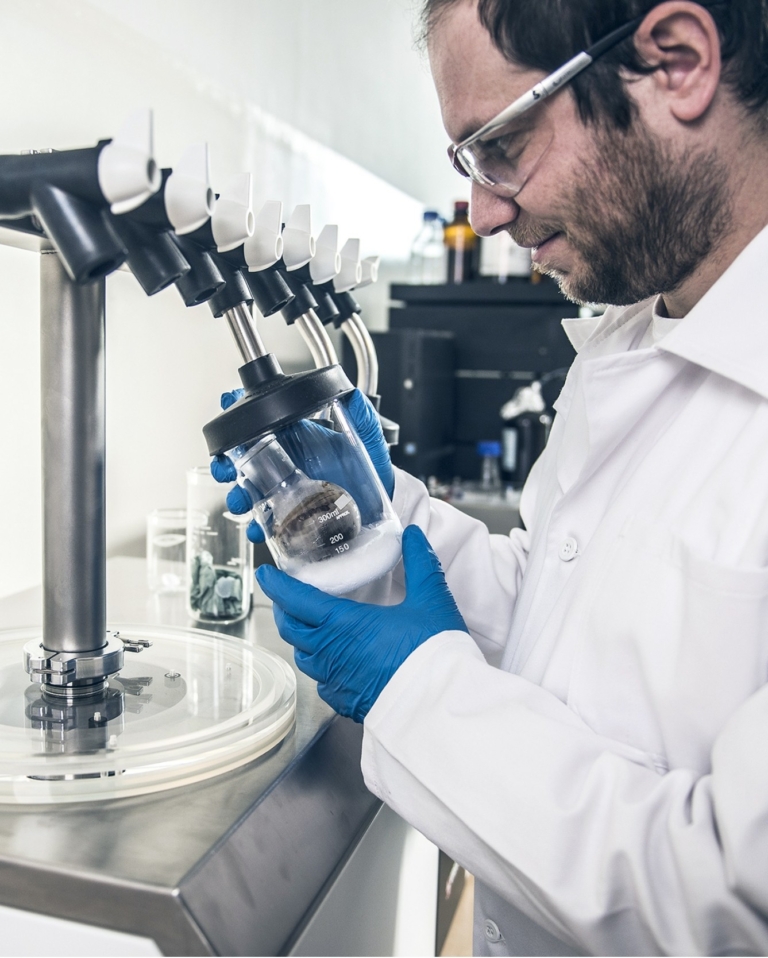
Custom synthesis
Providing for a custom synthesis of previously reported molecules using described synthetic procedures.
View more
Contract research
Developing novel synthetic routes to provide undescribed compounds in organic, bioorganic, and medicinal chemistry.
View more




Our Experts


Partners & distributors