Dual-Payload ADCs: Orchestrating Multiple Mechanisms of Action in a Single Molecule
For years, the development of Antibody-Drug Conjugates (ADCs) has followed a foundational principle: one antibody, one linker, and one payload. While this “one-drug” approach has led to numerous clinical successes, it faces inherent limitations—most notably the emergence of tumor resistance and the challenge of addressing heterogeneous cancer cell populations.
To overcome these hurdles, the industry is increasingly turning toward dual-payload ADCs. By delivering two distinct cytotoxic agents via a single antibody, researchers can leverage complementary mechanisms of action to improve therapeutic outcomes and prevent tumor escape.
The Strategic Advantage of Dual Payloads
The primary objective of a dual-payload ADC is not merely to increase absolute potency, but to achieve a synergistic effect through multi-targeted hits. This strategy offers several critical advantages:
Addressing Tumor Heterogeneity: Cancer is rarely a monolithic disease. By utilizing two payloads with different mechanisms, an ADC can more effectively clear diverse cell populations within a single tumor.
Mitigating Resistance: Delivering two drugs simultaneously reduces the likelihood that a cancer cell will develop resistance to the treatment, as it would need to bypass two independent cytotoxic pathways.
Synergistic MoA: Combining agents such as DNA-damaging payloads with repair inhibitors can significantly enhance the apoptotic response compared to monotherapy.

Navigating Technical and Chemical Complexity
While the therapeutic promise is high, the transition from single- to dual-payload architectures introduces significant engineering challenges. These molecules require highly sophisticated branched or multifunctional linkers and demand rigorous attention to:
Chemical Complexity: Synthesizing linkers that can carry two different payloads while maintaining stability is a formidable task.
Physicochemical Properties: Managing self-aggregation and ensuring high solubility becomes more difficult as the hydrophobic payload load increases.
Conjugation Precision: Site-selective conjugation strategies are essential to ensure a homogeneous Drug-to-Antibody Ratio (DAR) and predictable pharmacokinetics.
Therapeutic Window: Developers must precisely tune the release profiles and toxicological impact of two different cytotoxic agents concurrently.
Clinical Progress: A New Era of Targeted Therapy
Dual-payload ADCs have transitioned from theoretical concepts to clinical realities. Several Phase I programs currently illustrate the direction of the field:
CLIO-8221 (HMBD-802) by Callio Therapeutics: A HER2-targeting ADC that pairs a Topoisomerase I inhibitor with an ATR inhibitor. This combination is designed to induce DNA damage while simultaneously blocking the cell’s ability to repair that damage.
KH815 by Kelun-Biotech: This TROP2-targeting ADC utilizes a Topoisomerase I inhibitor alongside an RNA polymerase II inhibitor, attacking the transcriptional and replicative machinery of the cell.
IBI3020 by Innovent: A clinical-stage candidate targeting CEACAM5. While specific payload details remain undisclosed, it represents the growing institutional commitment to multi-payload formats.
Advancing ADC Innovation with SigutLabs
The success of these next-generation therapies rests entirely on the quality of the chemistry. The linker is the defining element that determines exactly how and when each payload is released.
At SigutLabs, we specialize in managing the high chemical complexity required for dual-payload systems. We support early-stage innovation by developing custom, high-purity linker-payload architectures tailored to your specific therapeutic goals. Our expertise in complex synthesis allows us to solve the stability and aggregation challenges inherent in multi-drug conjugates.
Is your team developing multi-payload strategies? Contact SigutLabs today to learn how our custom synthesis services can support your ADC development pipeline.

OUR CASE STUDY
Scale-up to accelerate drug discovery
Our experience helped overcome development hurdles for potential cancer & mental health drugs.
Read moreEmpowering neuro research with pro-N6pA
Sigut Labs scaled up pro-N6pA production, simplifying AMPylation research & boosting accessibility.
Read moreADC development leaps with new linkers
Novel linker design expedited ADC advancement, leading to promising lead compounds faster.
Read moreLincomycin derivative scale-up
Over 30 g of the desired product with exceptional purity was obtained through our optimized procedure.
Read morePurifying 350 kg of vitamin K2 oil
Our innovative scale-up technology helped to reduce the client’s purification process from days to hours.
Read moreOur services
What we excel in so you don’t have to
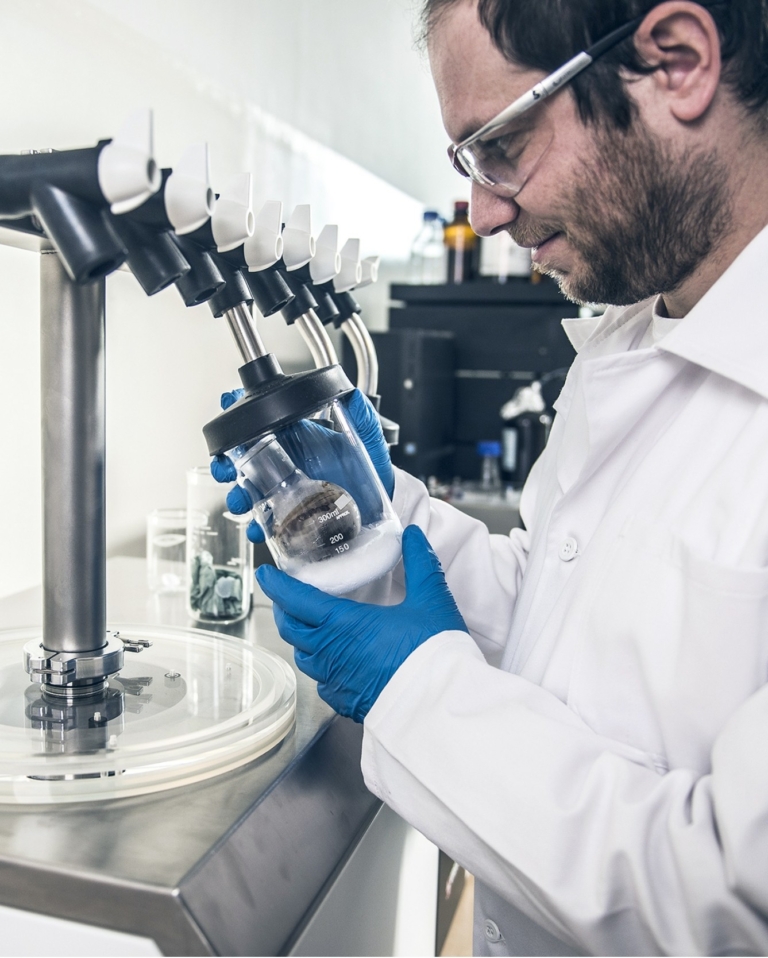
Custom synthesis
Providing for a custom synthesis of previously reported molecules using described synthetic procedures.
View more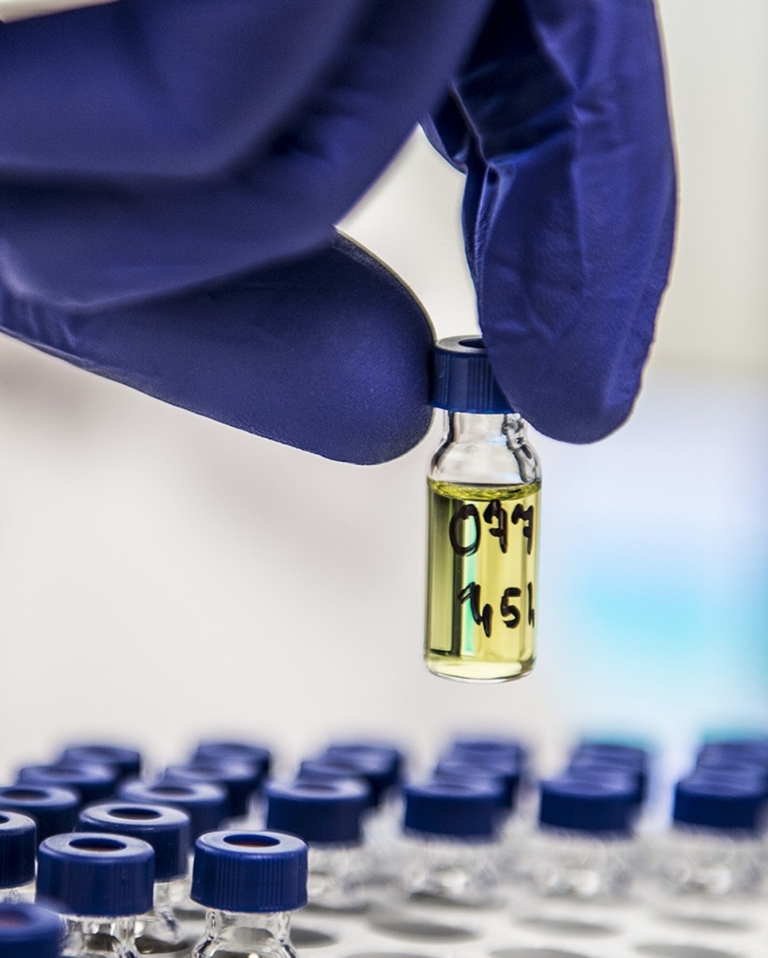
Contract research
Developing novel synthetic routes to provide undescribed compounds in organic, bioorganic, and medicinal chemistry.
View more





Our Experts


Partners & distributors