Beyond Biological Triggers: Exploring the Potential of Click-to-Release ADCs
In the current landscape of Antibody-Drug Conjugate (ADC) development, payload release is predominantly governed by biologically triggered mechanisms. Most traditional ADCs rely on intracellular environments to facilitate drug liberation, utilizing pathways such as protease cleavage, glycosidase activity, pH sensitivity, or redox processes.
While these biological triggers have proven effective, a sophisticated alternative is gaining momentum within preclinical research: click-to-release ADCs. This approach shifts the control of payload activation from the cell’s internal machinery to an externally administered, bioorthogonal chemical reaction.

Redefining Release: The Click-to-Release Mechanism
The click-to-release strategy differs fundamentally from conventional ADC design by decoupling the targeting phase from the release phase. The process typically follows a three-step sequence:
Tumor Accumulation: The ADC is administered and allowed to accumulate at the tumor site. During this phase, the linker–payload remains exceptionally stable in systemic circulation, minimizing off-target toxicity.
External Activation: Once the ADC is localized, a second, small-molecule activator is administered.
Chemical Fragmentation: This activator induces a tetrazine–TCO (trans-cyclooctene) click reaction. This specific bioorthogonal interaction triggers the chemical fragmentation of the linker, releasing the free payload precisely where it is needed.
From Proof of Concept to Preclinical Development
The “click-to-release” concept was pioneered through the in vivo activation of doxorubicin, demonstrating superior tumor selectivity and localized drug activation. Since then, the strategy has been extended to include more potent cytotoxins, such as MMAE-like derivatives.
Despite its potential, the technology remains in the preclinical stage. The primary hurdles to clinical transition involve the complexities of two-step dosing and the rigorous requirement to align the pharmacokinetics (PK) of both the linker and the activator. However, these challenges do not diminish the value of the approach; rather, they highlight how chemical control can bypass the inherent limitations of biological triggers.
Driving ADC Innovation Through Linker Design
The emergence of click-to-release technology underscores a broader trend in oncology: linker design is no longer just a structural necessity but a primary driver of ADC innovation. By exploring non-classical release mechanisms, researchers can achieve levels of precision and stability that were previously unattainable.
Partnering with SigutLabs for Advanced ADC Architecture
At SigutLabs, we are dedicated to supporting early-stage ADC innovation. Our team specializes in the design and synthesis of custom linker and linker–payload architectures. Whether your research requires classical biological triggers or advanced systems based on click chemistry, we provide the technical expertise necessary to bring complex architectures to life.
Are you looking to explore custom linker designs or non-classical release mechanisms for your next project? Contact SigutLabs today to discuss how our synthesis capabilities can accelerate your ADC development.

OUR CASE STUDY
Scale-up to accelerate drug discovery
Our experience helped overcome development hurdles for potential cancer & mental health drugs.
Read moreEmpowering neuro research with pro-N6pA
Sigut Labs scaled up pro-N6pA production, simplifying AMPylation research & boosting accessibility.
Read moreADC development leaps with new linkers
Novel linker design expedited ADC advancement, leading to promising lead compounds faster.
Read moreLincomycin derivative scale-up
Over 30 g of the desired product with exceptional purity was obtained through our optimized procedure.
Read morePurifying 350 kg of vitamin K2 oil
Our innovative scale-up technology helped to reduce the client’s purification process from days to hours.
Read moreOur services
What we excel in so you don’t have to
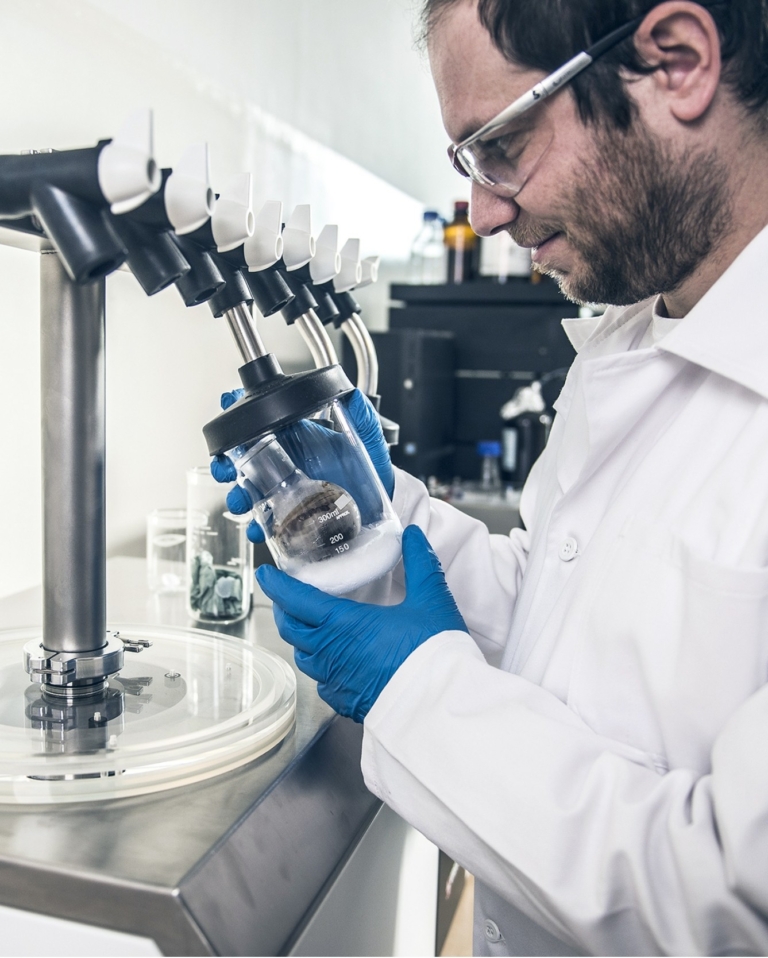
Custom synthesis
Providing for a custom synthesis of previously reported molecules using described synthetic procedures.
View more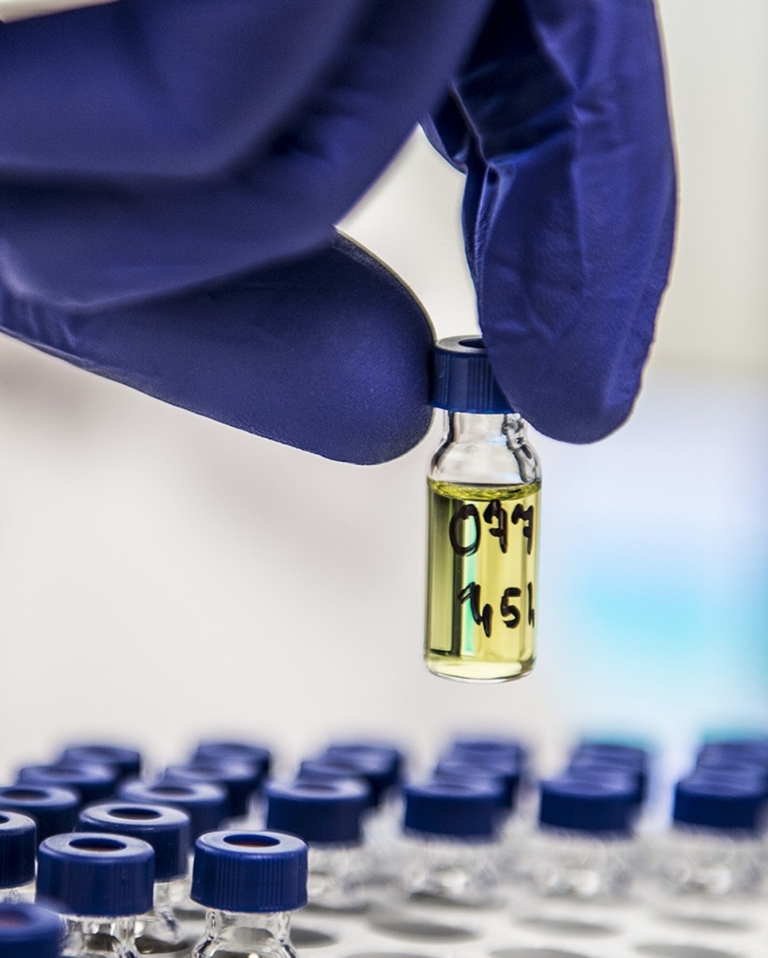
Contract research
Developing novel synthetic routes to provide undescribed compounds in organic, bioorganic, and medicinal chemistry.
View more




Our Experts


Partners & distributors